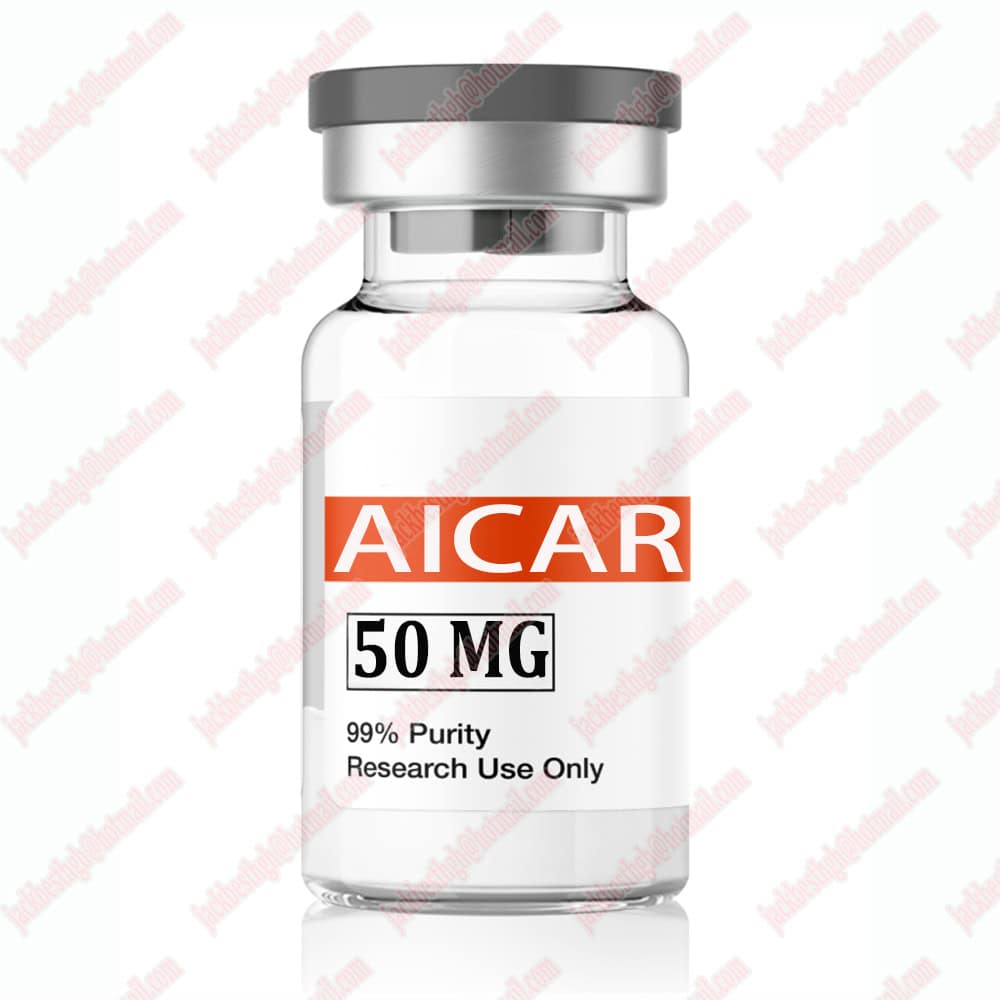
Description 99% Purity | AMPK Activator Nucleoside Product Specifications CAS Number: 2627-69-2 Molecular Formula: C9H14N4O5 Molecular Weight: 258.23 Da Purity:99.0% via HPLC-UV and Mass Spectrometry Appearance: Fine white sterile lyophilizate Mode of Action The biochemical activity of AICAR is defined by its intracellular conversion into ZMP (5-aminoimidazole-4-carboxamide ribonucleotide). The primary mechanism involves upon entering the cell, AICAR is phosphorylated by adenosine kinase to form ZMP. This defines the first semantic triple: [AICAR converts to ZMP]. Following this, ZMP acts as a structural analog of Adenosine Monophosphate (AMP), binding directly to the ??-subunit of the AMPK heterotrimer. This establishes the second triple: [ZMP mimics AMP signaling]. Furthermore, this binding induces a conformational change that promotes the phosphorylation of the ??-subunit at Thr172, thereby activating the AMPK complex. This forms the third triple: [AICAR triggers AMPK activation]. Quantitatively, this activation stimulates the translocation of GLUT4 to the cell membrane, enhancing glucose uptake independent of insulin. Research indicates that AICAR-mediated AMPK activation can increase mitochondrial protein expression by up-regulating the PGC-1?? transcriptional coactivator. Compound Background AICAR (5-Aminoimidazole-4-carboxamide ribonucleoside), also known as Acadesine, is a cell-permeable nucleoside analog that functions as a potent activator of AMP-activated protein kinase (AMPK). In biological systems, it mimics the effects of cellular energy depletion, effectively “tricking” the cell into a state of energetic stress. This signaling molecule is a cornerstone in research investigating metabolic remodeling, mitochondrial biogenesis, and the molecular pathways of physical endurance. [AICAR activates AMPK]. Reported Findings Enhanced Metabolic Endurance: Users report significant increases in aerobic capacity and “endurance-mimetic” effects in sedentary research models. Accelerated Fat Oxidation: Published research indicates a marked reduction in lipid storage through the inhibition of acetyl-CoA carboxylase (ACC). Insulin-Independent Glucose Uptake: Per experimental records, AICAR maintains glucose homeostasis even in states of insulin resistance. Anti-Inflammatory Signaling: Research models demonstrate a reduction in pro-inflammatory cytokines like TNF-?? and IL-6 via the modulation of NF-??B pathways. Vascular Perfusion Support: Multiple research groups note improved blood flow and nitric oxide (NO) production in ischemic tissue models. Key Points: AICAR represents a premier research tool for investigating the master regulation of energy metabolism and the pharmacological induction of endurance-like adaptations. Frequently Asked Questions Is AICAR the same as GW-501516 (Cardarine)? No. AICAR activates the AMPK pathway directly, while Cardarine is a PPAR-delta agonist. They are often researched together for synergistic endurance effects. How long does AICAR stay in the system? AICAR has a relatively short half-life of approximately 2 hours, requiring frequent administration in research protocols to maintain AMPK activation. Does AICAR require insulin to work? No, AICAR promotes glucose uptake through a pathway that is entirely independent of the insulin receptor. What does a vial of high-purity AICAR look like? It appears as a uniform, white lyophilized cake that dissolves clearly and almost instantly upon the addition of a sterile diluent. Can AICAR be taken orally? AICAR has very poor oral bioavailability (less than 5%); therefore, parenteral administration is the standard for research purposes. These statements have not been evaluated by the Food and Drug Administration. This product is not intended to diagnose, treat, cure, or prevent any disease. Consult a qualified healthcare professional before use.